Water is sneaky. It escapes through cracks you cannot see, travels along pipe runs, and shows up somewhere far from the actual problem. That is why one of the oldest tricks in leak detection is still one of the best: add color to the water and watch where it goes.
That is dye testing. A technician releases a small amount of highly visible, non-toxic dye into still water near a suspected leak. If there is an opening, the moving water pulls the dye toward it like smoke drifting toward an open window. Where the dye goes, the water goes.
We use dye tests on pools, spas, and fountains every single day. Plumbers and municipalities use the same idea on sewer pipes and storm drains. This post explains how a dye test works, where it shines, where it falls short, and how to run a basic one yourself.
How We Use Dye Testing to Pinpoint Pool Leaks
Start with how this looks in the field, because the technique matters more than the concept.
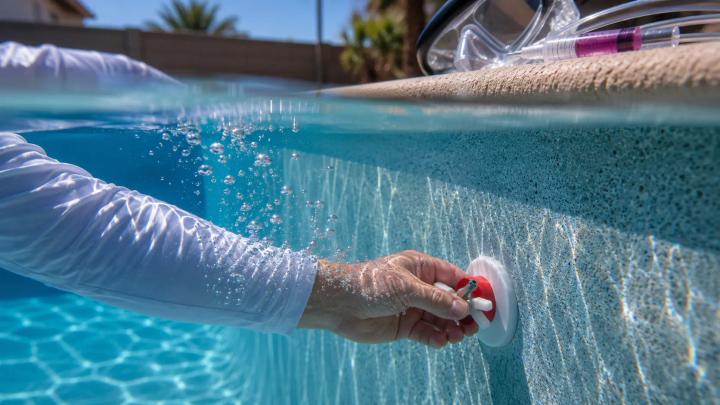
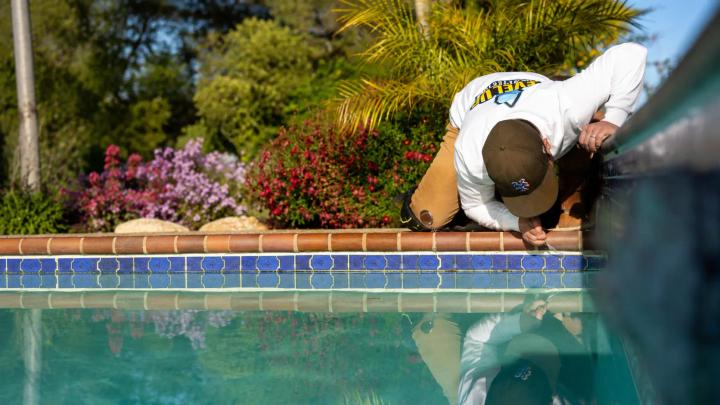
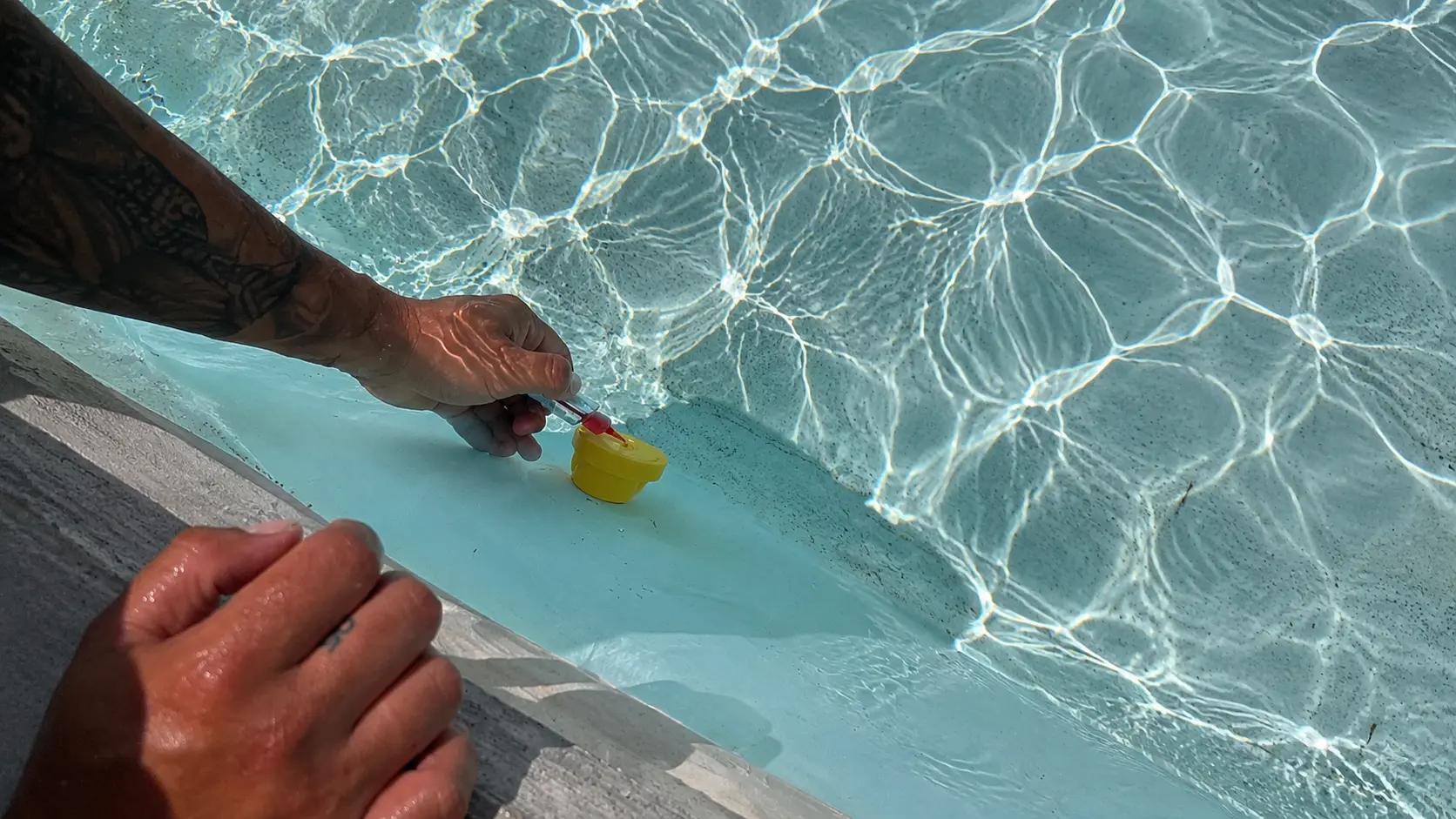
When we dye test a pool, the water has to be dead still. Pump off, swimmers out, wind calm. Any current will drag the dye around and lie to you. Then we move slowly. A diver or a technician with a pole reaches a syringe of fluorescent dye close to the suspected area, a crack, a fitting, a light niche, the skimmer throat, and releases a small, steady thread of dye an inch or two away.
Then we watch. In still water, dye should hang in a lazy cloud. If there is a leak, the cloud does not hang. It stretches, bends, and gets pulled into the opening in a thin, unmistakable stream. That draw is the leak telling on itself.
Here is the part most people get wrong, and it is the difference between a pro dye test and a wasted afternoon. Dye is a confirmation tool, not a search tool. A pool has too much surface area to dye test blindly. We listen first with LeakTronics hydrophone equipment to narrow the source, then use dye to confirm or disprove the exact spot before any repair happens.
"Dye does not find the leak. Dye proves it. If someone squirts dye around your pool at random for an hour, they are guessing with color. We listen first, narrow it down, then let the dye make the case. Thirty seconds of dye in the right spot beats a whole bottle in the wrong ones."
Level Up Leak Detection team
Think your pool has a leak? Get it confirmed before you pay for a repair. Call Level Up Leak Detection at (866) 420-5383 or schedule online.
What Is a Dye Test, Exactly?
A dye test is a visual leak detection method used to trace water flow. The dye itself is a concentrated, non-toxic colorant, usually fluorescent yellow-green or red, chosen because it stays highly visible even in small amounts and breaks down without harming people, pets, or the water.
The logic is simple physics. Water moving through a leak creates suction at the opening. Dye released nearby rides that current. When the dyed water is observed entering a crack, a joint, or a drain it should not reach, you have visual proof of both the leak and its exact location.
That simplicity is why dye testing shows up across so many industries. The dye and the setting change. The principle never does.
Dye Testing Beyond Pools: Sewer Lines and Plumbing
To be clear about our lane: Level Up is a pool, spa, and fountain leak detection company. We do not test sanitary sewer systems. But since "dye testing" often refers to sewer work, here is how the same tool works on that side of the fence, so you know who to call for what.
Municipalities and plumbing contractors use dye testing to inspect sewer laterals and hunt down inflow, which is clean water sneaking into the sanitary sewer where it does not belong. Every gallon of stormwater or groundwater flowing into the sanitary sewers ends up at treatment plants, and the municipality pays to treat water that never needed treating. Too much inflow and infiltration can also cause a sewage backup or an overflow into a local waterway.
The method used is straightforward. An inspector introduces dye into a suspect source, a roof downspout, a sump pump discharge, yard drains, area drains, or floor drains, then watches the downstream sanitary sewer manhole. If dyed water shows up in the manhole, that source is illegally or accidentally cross-connected to the sewer line. Inspectors also use dye flooding, saturating an area like a driveway edge or a landscape drainage path with dyed water, to check whether it seeps into cracked sewer pipes below. Many programs pair smoke and dye together: smoke testing pushes visible smoke through the pipes to reveal openings and defective frame seals and wall joints, then a dye test confirms each defect individually. Larger diagnostics may add CCTV camera inspection and flow measurements to quantify the problem areas.
One version of this you can run at home takes two minutes. Put a few drops of food coloring in your toilet tank, wait fifteen minutes without flushing, and check the bowl. Color in the bowl means the flapper is leaking. That is a dye test, same principle we use in pools.
If your issue smells like a sewer problem (an actual sewage odor, a gurgling drain, wastewater backup), call a licensed plumber or your local authorities. If your issue is a pool or spa losing water, that is us.
Where a Pool Dye Test Points, and What It Means
Back in the pool, dye behavior at each spot tells its own story. These are the places we test most, and what a positive draw usually means.
Notice that a positive dye test at the main drain or a fitting often points deeper, into the plumbing. That is where dye hands off to pressure testing, and where our trenchless PipePoxy repair fixes the pipe without draining the pool or digging up the deck.
How to Run a Basic Dye Test at Home
Want to check a suspect spot in your own pool before calling anyone? Here is the clean way to do it.
- Turn off the pump and give the water 15 to 30 minutes to go completely still.
- Confirm you actually have a leak first with a bucket test, so you are not chasing evaporation. Our guide on how to tell if your pool has a leak covers it.
- Use real leak detection dye from a syringe or dropper. In a pinch, dark food coloring works for spots you can reach.
- Release a small, slow thread of dye one to two inches from the suspected area. Do not blast it.
- Watch for 30 to 60 seconds. Drifting cloud means no draw. A thin stream pulling toward the spot means you found something.
Two honest limits. First, dye only works where you can see, so underground pipe leaks and anything behind the shell are invisible to it. Second, a negative dye test at one spot does not mean the swimming pool is fine. It means that spot is fine. If your water loss continues, the leak is somewhere you have not tested, and that is when professional pool leak detection saves you weeks of guessing.
Found a draw you cannot explain, or dye tested everything you can reach and the level keeps dropping? Call (866) 420-5383 and let us take it from there.
Dye Testing Services in Every Level Up Territory
Dye testing is part of every Level Up inspection, alongside hydrophone listening and pressure testing, and it comes at a flat rate in every market we serve. Property owners can find their local team here:
- Colorado (Littleton): (720) 783-5380, view territory
- Columbus, OH: (380) 220-6760, view territory
- North Atlanta, GA: (678) 336-8647, view territory
- North Austin, TX: (512) 357-7272, view territory
- Pasco County, FL: (727) 513-2525, view territory
- South Austin, TX: (737) 520-4735, view territory
- West Las Vegas, NV: (725) 425-5708, view territory
Let the Dye Make the Case
Dye testing works because water cannot hide which way it is moving. Add color, watch the pull, and unexplained wet spots stop being a mystery.
For sewers, call a plumber. For a pool, spa, or fountain losing water, call the team that dye tests every day. Reach Level Up Leak Detection at (866) 420-5383, find your local territory, or schedule your leak detection online. We will find it, and we will fix it right the first time.